How to Heal Elbow Tendonitis or Tendinosis: A Physical Therapist Explains
Tendon pain can be frustrating because it often lingers much longer than a muscle strain. Whether it's your shoulder, elbow, knee, Achilles tendon, or hip, understanding why tendons become painful is the first step toward choosing the right treatment and returning to the activities you enjoy.
What is elbow tendonitis and how does it happen?

Elbow tendonitis or tendinosis includes Lateral epicondylalgia, aka tennis elbow and medial epicondylalgia aka golfers elbow. It includes all pain on either side of the elbow. stems from a repetitive irritation of the common tendon (yellow) of the wrist and finger extensors. With repetitive wrist and finger movements, even heavy lifting, stress and strain is put through the tissues that attach the muscles to the bones making it difficult and painful to do simple things such as driving, opening doors, brushing your teeth, type and keep you from doing things you enjoy like gardening or crafting. Tendons become irritated when the demands placed on them exceed their current capacity to tolerate load.
(Netter plate #45)
How to reduce the pain from elbow tendonitis

Ice Massage
Rather than using an ice pack, ice massage causes a quicker numbing and stronger blood vessel constricting response in the irritated tissues. Freeze some water in a dixie cup, peel back the top half of it once it’s frozen and move the ice around in circles concentrating on just the painful area. When it’s numb it’s done! (about 5 minutes)

Stretch the muscles and tendons that go all the way down and into your finger tips frequently throughout your day. Try to do them as soon as you notice pain or tension starting to increase to prevent the higher spikes of pain or soreness at the end of the day. Click on the link above to learn all of the stretches you can do.

Brace
Get a tennis elbow brace, not a supportive wrist or elbow brace. When the pressure point band is placed over the most tender spot in your forearm, it changes where the peak tension occurs when you grip, lift or use your hands and distributes it more evenly throughout the muscles in the area, allowing that tender spot to settle down.

Glide
Nerves and tendons are meant to glide and slide on each other. That movement tends to get compromised when tissues in the area get irritated and inflamed. Often and numbness and tingling coincide with tendinitis as a result.
After doing the stretches, glide the ulnar nerve (blue arrow), median nerve (black arrow), and the finger tendons (red bracket in the first picture) to prevent additional irritation, numbness, tingling, sharp zinging pain and the higher spikes of pain or soreness at the end of the day.
Stay on top of your symptoms with icing, stretching and gliding and use the brace if you can’t get away from doing things that continually aggravate your elbow pain. Wear it during all waking hours at first. Once you start to feel better, only wear it when you are going to do something that usually hurts the elbow or if you are doing anything above and beyond what you usually do.
These techniques work great for carpal tunnel too. Just ice massage on the palm side of your forearm instead of at the elbow and use a carpal tunnel brace instead of a tennis elbow brace especially at night or when working at the computer.
Why does elbow pain keep coming back? Does elbow tendonitis heal on its own?
The elbow is part of a larger movement system. Improving posture, shoulder stability, breathing, and movement quality can reduce unnecessary stress throughout the arm and improve overall function. One of the biggest misconceptions about elbow tendonitis is that it's only a elbow problem. In reality, your elbow is part of a much larger movement system. The position of your trunk, shoulders, neck, and even the way you breathe all influence how forces are transferred through your arms during everyday activities.
When your posture, breathing, and muscle coordination are working well, the workload is shared across your body and the tendon experiences an appropriate amount of tension. When movement becomes less efficient, other muscles fatigue or stop contributing as effectively, and the tendon is asked to carry more of the load than it was designed to handle. Over time, this repeated overload can lead to pain and reduced capacity.

Why Rest Alone Doesn't Fix Elbow Tendon Pain
One of the biggest misconceptions about tendon pain is that the solution is to simply stop using the tendon until it feels better. While a brief period of relative rest can help calm pain during an acute flare-up because the tissues stop getting stressed, tendons don't become healthier by avoiding all stress. In fact, healthy tendons require the right amount of loading to stay strong. Tendons have very poor blood flow and rely on getting the oxygen and nutrients they need to heal through movement. Also, tendons are primarily made of connective tissue. Connective tissue organizes according to the stress applied to it. Its a delicate balance; they have to be stressed enough in order to heal, but not stressed so much that they get irritated AND get stressed in a way that’s healthy. Dysfunctional movement patterns cause abnormal loading that keeps the mechancial stress - pain - irritation cycle alive.
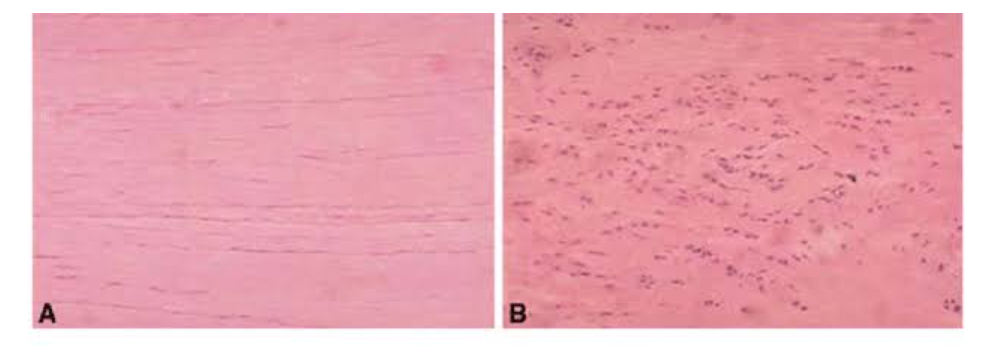
This is what tendon tissue looks like under the microscope. Picture A is healthy tendon tissue. The tissue units all line up along each other all in the same direction like an elastic band for even distribution of the forces applied to it and minimal friction. When tendon tissue is chronically stressed with abnormal loading due to faulty movement patterns (picture B), the tissue units disorganized, forces are distributed unevenly and create firction abnormal stress through the tissue and therefore chronic irritation.
Think of your tendon as part of your body's movement system. Every time you walk, climb stairs, lift a child, carry groceries, or exercise, your tendons transfer force from your muscles to your bones. They are designed to handle these loads—but only if the demands placed on them match their current capacity.
When a tendon becomes overloaded, pain is your body's way of telling you that the demands being placed on the tissue are greater than it can currently tolerate. If you respond by completely avoiding activity for weeks, the pain may improve, but your tendon's capacity often decreases as well. When you eventually return to your normal activities, the tendon is asked to do more than it's prepared for, and the pain returns.
This creates a frustrating cycle:
Pain → Rest → Reduced Capacity → Return to Activity → Pain Again
The goal isn't to eliminate all stress from the tendon. The goal is to provide the right amount of stress so the tendon can adapt.
Healthy Tendons Adapt to Appropriate Loading
When tendons are exposed to a level of activity they can successfully tolerate, they respond by becoming stronger and more resilient over time.
Appropriate Loading
→ Stimulates healing and adaptation
→ Improves tendon capacity
→ Builds a stronger, more resilient tendon
On the other hand, repeatedly asking the tendon to tolerate more load than it's ready for can exceed its current capacity.
Excessive Loading
→ Pain and irritation
→ Reduced function
→ Temporary decrease in capacity
The key is finding the "sweet spot"—challenging the tendon enough to encourage adaptation without repeatedly overwhelming it. The general rule of thumb is staying within two points of whatever your pain level is at baseline and avoiding sharp pains.
This is where healthy movement becomes so important. Efficient posture, good breathing mechanics, coordinated muscle activation, and progressive strengthening help distribute forces throughout your body instead of asking one tendon to do all the work. When the hips, core, shoulders, and surrounding muscles share the workload effectively, the tendon experiences a more appropriate amount of stress and can gradually increase its capacity.
This is why physical therapy doesn't simply focus on the painful tendon. We improve how your entire movement system works together so your body can tolerate more activity with less strain.
Remember, the goal isn't to avoid loading a tendon—it's to load it wisely. When you combine healthy movement, gradual strength training, appropriate recovery, and progressive increases in activity, you give your tendons the opportunity to adapt, become stronger, and support the activities you enjoy for years to come.